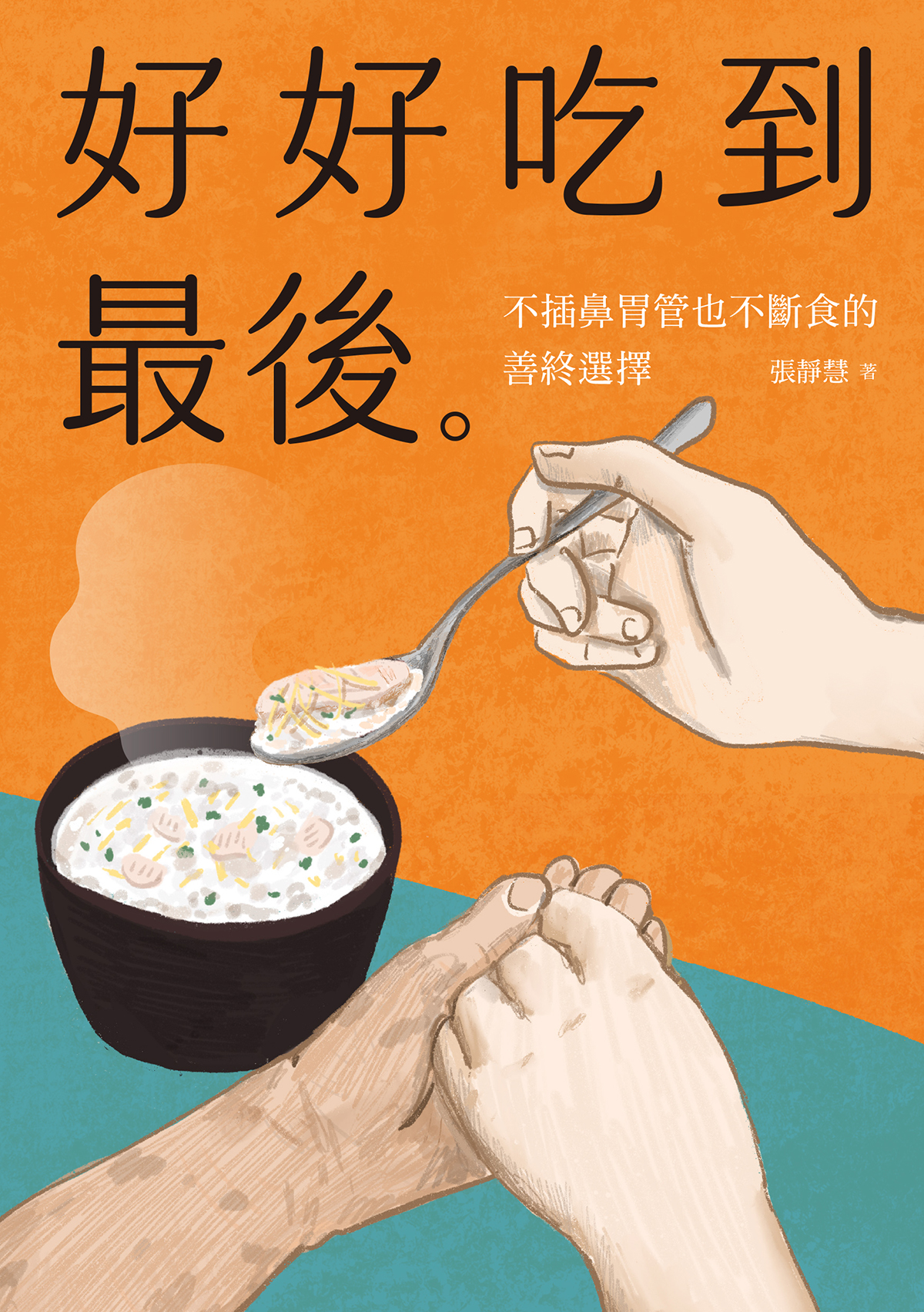
Eating Well to the Very End:The Third Path Beyond Tube Feeding and Starvation
好好吃到最後:不插鼻胃管也不斷食的善終選擇
Author: Chang Ching-hui(Award-Winning Senior Medical Journalist)
ISBN: 978-626-93126-2-7
Date: 7/2026
Pages: 256
Length: 87,824 characters
- Target Audience:
- Healthcare & Clinical Professionals:Palliative Care Physicians and Nurses, Geriatricians, Speech-Language Pathologists (SLPs), Registered Dietitians
- Long-Term & Community Care Leaders & Staff:Long-Term Care & Nursing Home Administrators, Care Managers, Professional Caregivers, and Direct Care Workers
- Advocates & the Public:Healthcare Policy Makers, Family Caregivers, and the General Public
1. Background & Societal Context:The Rise of Ethical Dilemmas
- The “Fasting for Good Death" Controversy:Starting around 2023, public narratives in Taiwan surrounding deliberate starvation in patients with advanced illness or severe disability continue to spark intense debates among advocates, supporters, and skeptics.
- Clinical Position Statement(JPM, June 2026):As highlighted by the Taiwan Academy of Hospice Palliative Medicine(TAHPM)in the Journal of Palliative Medicine, practices popularized as “good deaths" sometimes mask Involuntary Starvation for a Good Death(ISGD)—where families withdraw nutrition from patients lacking decision-making capacity(e.g., severe dementia or altered consciousness).
- ISGD vs. VSED:Unlike Voluntary Stopping Eating and Drinking (VSED)by competent patients, ISGD raises grave ethical, clinical, and legal concerns regarding surrogate decision-making and patient autonomy.
- The Caregiver Dilemma:Families face a distressing false binary: defaulting to invasive, indefinite nasogastric(NG)tube placement, or surrendering to premature, enforced starvation.
2. Core Thesis
- Reclaiming Comfort Feeding as Clinical Excellence:This book proposes a vital “Third Path":implementing evidence-based Comfort Feeding(oral-assisted feeding focused on sensory pleasure and quality of life rather than strictly caloric goals). It advocates that swallowing impairment/dysphagia in advanced age or illness does not automatically dictate immediate artificial nutrition or total food withdrawal, but calls for comprehensive, interdisciplinary evaluation, care, and Shared Decision-Making(SDM).
- Holistic End-of-Life Care Beyond Nutrition:While eating is vital, a tube-free status alone does not guarantee a peaceful death. Patients in advanced decline endure multifaceted distress—from physical symptoms(pain, dyspnea, delirium)to dependency guilt and existential angst. True palliative care demands holistic physical, psychosocial, and spiritual support, ensuring patients are cared for as whole human beings, not just managed for oral intake—or the lack thereof.
3. Empirical Research & Evidence
Based on 100+ hours of field research, the book synthesizes multidisciplinary insights:
- 57 Firsthand & Relayed Cases:Highlighting the lived experiences and dilemmas of patients and caregivers.
- 41 Expert Interviews:Input from physicians, nurses, SLPs, dietitians, professional caregivers, and legal experts.


發表留言