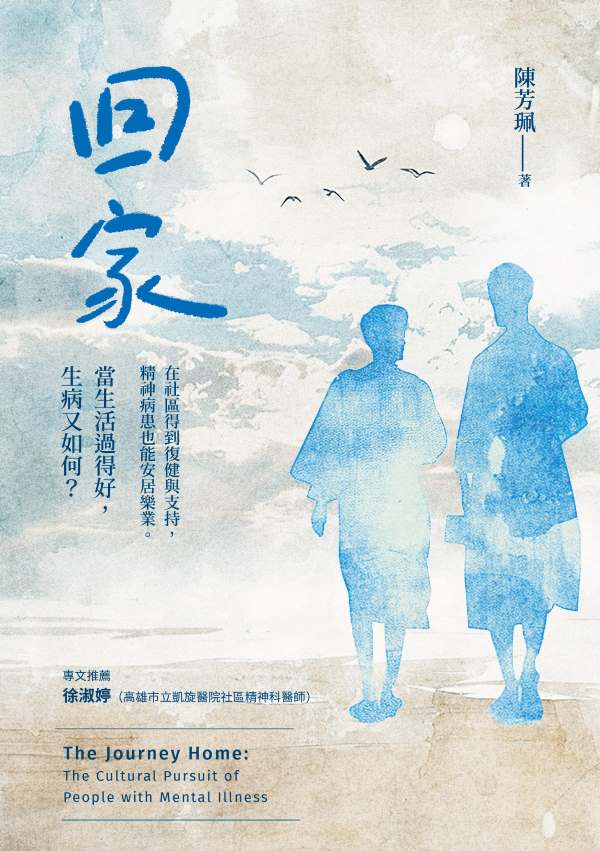
The Journey Home:The Cultural Pursuit of People with Mental Illness
回家:在社區得到復健與支持,精神病患也能安居樂業。當生活過得好,生病又如何?
Author: Fang-pei Chen 陳芳珮
ISBN: 9786269840656
Date: 8/2024
Pages: 288
Length: 99,605
The journey home is not just a personal endeavor but a cultural pursuit—a testament that individuals with mental illness can meet societal norms expected of adults.
Due to the limited resources for psychiatric rehabilitation, families often become the only source of support for Taiwanese with mental illness in the community. Consequently, the decision to discharge someone from a psychiatric facility hinges largely on their family’s choice.
So, what does it take for Taiwanese with mental illness to return home after extended institutional care?
Drawing on a qualitative research project, this book delves into the experiences of residents of psychiatric halfway houses transitioning to community living. Through the perspectives of residents, their families, and halfway house staff, the author explores the concept of home, identifies factors that support successful reintegration, and discusses the challenges encountered in community living.
Given the substantial caregiving burden previously shouldered by families alone, their hesitation to accept the resident’s return often stemmed from concerns about recurring past difficulties. In response, residents demonstrated readiness for community living by assuming self-care responsibilities, participating in household chores or family duties, and maintaining employment. Essentially, they needed to demonstrate their “usefulness” and regain social standing. Research analysis indicated that those who achieved these goals successfully were more likely to return home or establish independent lives in the community, bringing joy to their families. Conversely, individuals who struggled to meet these benchmarks found it challenging to integrate fully into community life and required ongoing family support.
However, stigma surrounding mental illness in the community hindered residents’ reintegration efforts. Inadequate allocation of resources for psychiatric rehabilitation and employment services in Taiwanese communities exacerbated these challenges, leading affected individuals to be perceived as “unproductive.”
The mental health recovery movement advocates for acknowledging the “personhood” of individuals with mental illness. In Taiwanese society, which places significant emphasis on familial responsibilities and societal expectations as integral to personhood, this recognition is crucial. Therefore, the journey home is not just a personal endeavor but a cultural pursuit—a testament that individuals with mental illness can meet societal norms expected of adults. In conclusion, the author urges a reassessment of Taiwan’s mental health care system and the enhancement of community psychiatric rehabilitation. Only by fully addressing the cultural dimensions of mental health recovery can individuals with mental illness receive the necessary support to successfully return home.

Fang-pei Chen 陳芳珮
Dr. Fang-pei Chen received her PhD in Social Welfare from the University of Wisconsin-Madison in the USA. She is a Full Professor at National Chung Cheng University in Taiwan.
Her scholarship focuses on enhancing community psychiatric rehabilitation to support mental health recovery for people with mental illness.
Her research areas include: lived experiences with mental illness, cultural and social factors influencing mental health recovery, practices of community psychiatric rehabilitation services, and mental health legislation and system operation.

 游擊文化
游擊文化 
發表留言