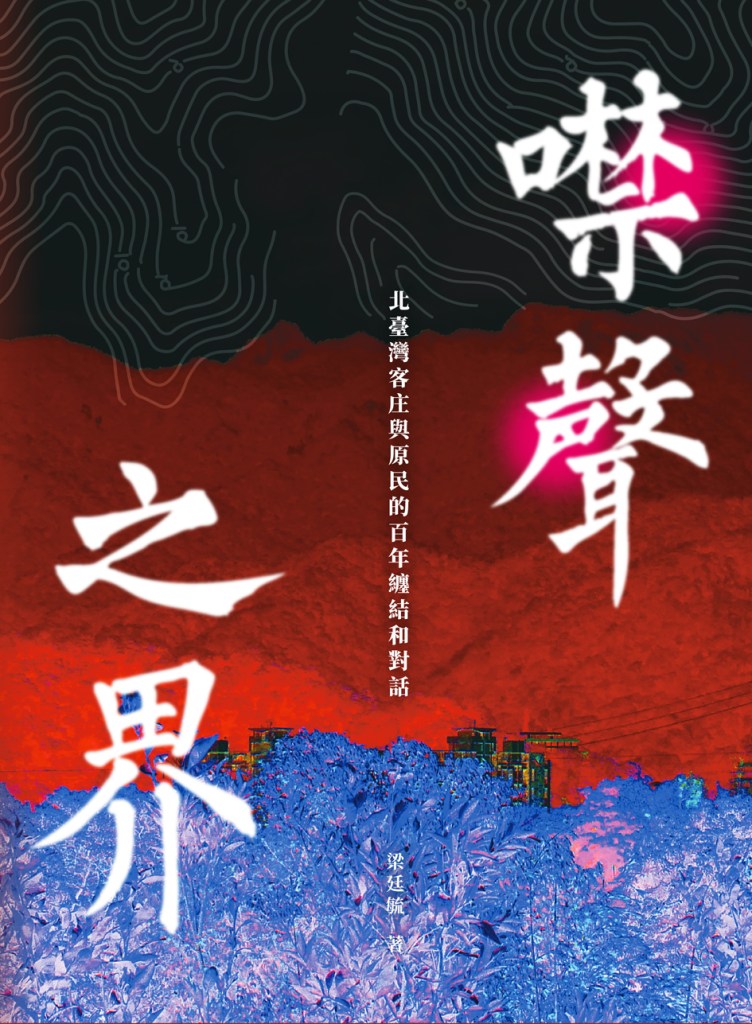
Driven by the accounts of beheadings in the family history, the author of this book ventures into the land of the ancestors’ deaths, interviewing local Hakka and indigenous elders and examining historical documents to restore the history of ethnic interactions. The goal is to open a dialogue and achieve reconciliation between these communities.
【Book title】
The Boundary of Silence: A Century-Long Entanglement and Dialogue Between the Hakka Villages of Northern Taiwan and Indigenous Peoples
【Book introduction】
As a national cultural policy, the ‘Taiwan Romantic Route 3’ seeks to revitalise the Hakka villages along the route by uncovering and inventing Hakka cultural and aesthetic symbols. However, the precursor to Route 3, the Tuniugou (aboriginal boundary) / Aiyong Line (defense line of frontier gourd), represents a man-made boundary between indigenous peoples and Han settlers, highlighting centuries of competition and conflict between these groups in the region. Family histories recount stories of ancestors who were beheaded, driving the author of this book to explore the shallow mountain areas of northern Taiwan, where their forebears had settled. The author interviewed village elders, combed through historical documents, and sought to uncover the interactions and negotiations between indigenous peoples and Hakka communities over generations for survival. The aim is to understand why the elders are unable to let go of the pain and grievances in their memories and to initiate multi-dimensional dialogue and understanding between communities, seeking reconciliation and healing of the historical and contemporary wounds.
The artist and researcher’s focus in recent years on the ‘Beheaded Stream Art Project’ emphasises project-based art and interdisciplinary local research. The project examines the intersection of recent efforts for transitional justice and the non-human turn, exploring supernatural ghosts and the historical interactions and memories between Han Chinese and indigenous peoples. It also seeks to develop hybrid exhibition platforms through exhibitions, seminars, and workshops as forms of social engagement to implement related projects.
【Author】
Liang Ting-Yu 梁廷毓
The work has been invited for exhibitions and screenings at various venues, including the Zanabazar Museum of Fine Arts, National Taiwan Museum of Fine Arts, Jim Thompson Art Center, and Taiwan Contemporary Culture Lab. Related research has received the S-An Award of Aesthetics, along with academic works published in journals such as Taiwan Historica, The Taiwan Folkways, Journal of National Museum of History, and History Taiwan: Journal of the National Museum of Taiwan History.
 游擊文化
游擊文化 
發表留言